
March 14–April 12, 2026 – With FLORALFARBEN, Jürgen Paas presents a conceptually precise yet sensually experiential installation that exemplifies art unfolding between language, perception, and space. In the glass pavilion of Grugapark, the work develops a unique dynamic through the interplay of architecture, nature, and changing light: color appears here not as a visible property, but as a concept—triggered by terms, normative systems, and individual associations. This combination of clear conceptual framework, participatory quality, and site-specific expansion makes the work particularly relevant for collectors interested in sustainable, discourse-oriented positions. The accompanying edition “ROSE” and the catalogue also offer concrete access to a work that exemplifies how contemporary art positions itself between idea, object, and experience—with corresponding potential for development.
March 14–April 12, 2026, viewable from the outside all day.
Opening: Saturday, March 14, 2026, 4–6 p.m.
Closing event and catalog release: Sunday, April 12, 2026, 2–4 p.m.
Location: Glass Pavilion in Grugapark – Glass Pavilion on Google Maps
We cordially invite you to the exhibition opening on Saturday, March 14, 2026, from 4–6 p.m.
Introduction by Torsten Obrist, followed by an artist talk with Jürgen Paas. The exhibition runs until April 12, 2026, and can be viewed from the outside all day. The closing event will take place in the glass pavilion on Saturday, April 12, 2026, from 2 to 4 pm. The exhibition is located in the glass pavilion of Grugapark Essen.
Exhibition series in vitro – Art in the Glass Pavilion.
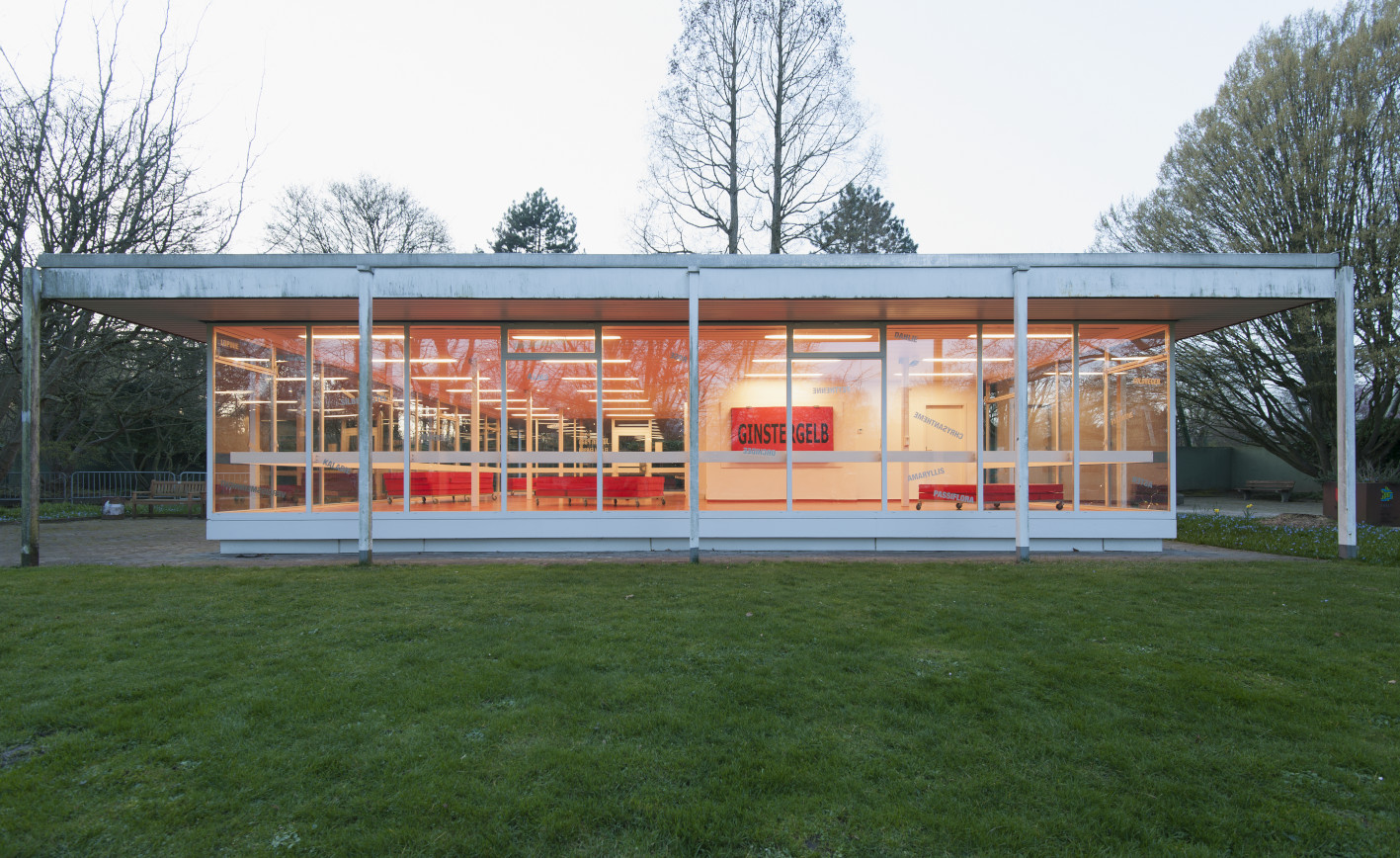
In our series, we are once again presenting an installation work by Jürgen Paas, “Floral Colors,” which directly relates to the architecture of the extraordinary pavilion and its integration into a botanical garden. Paas presents an installation of 15 signal-red PVC lightweight blocks, each labeled with a color name from the standardized RAL color system. The names are borrowed from the flora and evoke the color characteristics of plants.
-

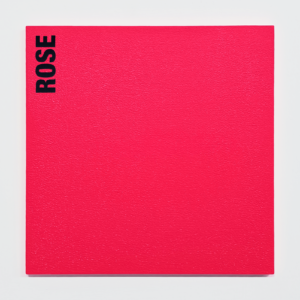
Jürgen Paas: Rose
450,00 € – 600,00 € Details This product has multiple variants. The options may be chosen on the product page
A particular challenge of the glass pavilion in Grugapark is its exposure to the phenomena of nature. Due to its all-around transparency, ambient light and weather also play a role in the artwork’s conception. Ideally, this results in a dynamic interplay between nature, architecture, and art.
And Jürgen Paas has masterfully realized this with his conceptual herbarium. He presents an installation of 15 signal-red PVC lightweight blocks, each labeled with a color name from the standardized RAL color system. Paas has chosen color names derived from plants, such as gentian blue or lemon yellow. The colors stand as symbolic expressions without a signifier; the color is only named and not shown. However, the name evokes a specific color in the viewer’s imagination. While the RAL system refers to a precise color, everyone likely has a slightly different idea of what that color should look like, because no two lemons are alike. Colors are by no means as clearly definable as the RAL system would have us believe. The reverse is more likely: If you look up lemon yellow in the RAL chart, most people would probably say, “Yes, that’s what a lemon looks like.” The underlying idea is to establish a common standard for a color, but also to translate something purely visual into spoken words, which is only ever possible approximately. The poetically evocative color names, therefore, actually originate from the technical sphere of industrial standards, which Paas visualizes with the rough, galvanized steel carts. While a single block of paint is brought out for demonstration purposes and inserted into a wall clamp, the remaining colors are stacked on the trolley, as if waiting to be pushed back into storage to their rightful place.
In fact, the blocks are usable; they are comfortable to sit on and can be moved. The floral paints were created and first shown at the 2008 Bavarian State Garden Show, twenty years ago, and even then, people took the PVC blocks, laid them on the grass, and sat on them. This interaction was anticipated and intended.
In Grugapark, this installation returns home, namely to the grounds of a former garden show, the Great Ruhrland Garden Show, or Gruga for short. Here, it reaches its culmination through expansion, with the glass pavilion becoming, in effect, a part of it: At the threshold between inside and outside—on the glass panes—Paas has placed the names of plants all around, some very familiar, some less so, but all of which could be found in a botanical garden like the Gruga. Like in a botanical archive, a herbarium, plants are “collected” here, but unlike a herbarium, analogous to the color blocks, without any signifier, that is, without any evidence or description of the plant species. The herbarium arises purely conceptually in the imagination, as viewers ask themselves what this or that plant looks like, what color it is, and what other characteristics it possesses. And depending on their prior knowledge, these ideas are exchanged, discussed, and translated into spoken words among the viewers. And that is the core of the installation FLORALFARBEN: there are only linguistic approaches to the visual, to the plants, the colors, to the art. The austere language of the plotted lettering, the steel frames, and the rectangular blocks therefore deliberately contrasts with the organic proliferation of the plants that give the installation its name and with the otherwise lush vegetation surrounding the pavilion. The mere mention of the plants creates organic vegetation in all its multifaceted color solely in the imagination and communication of the viewers.
A catalog and the edition “ROSE” were produced to accompany the exhibition.