Details
um 1900
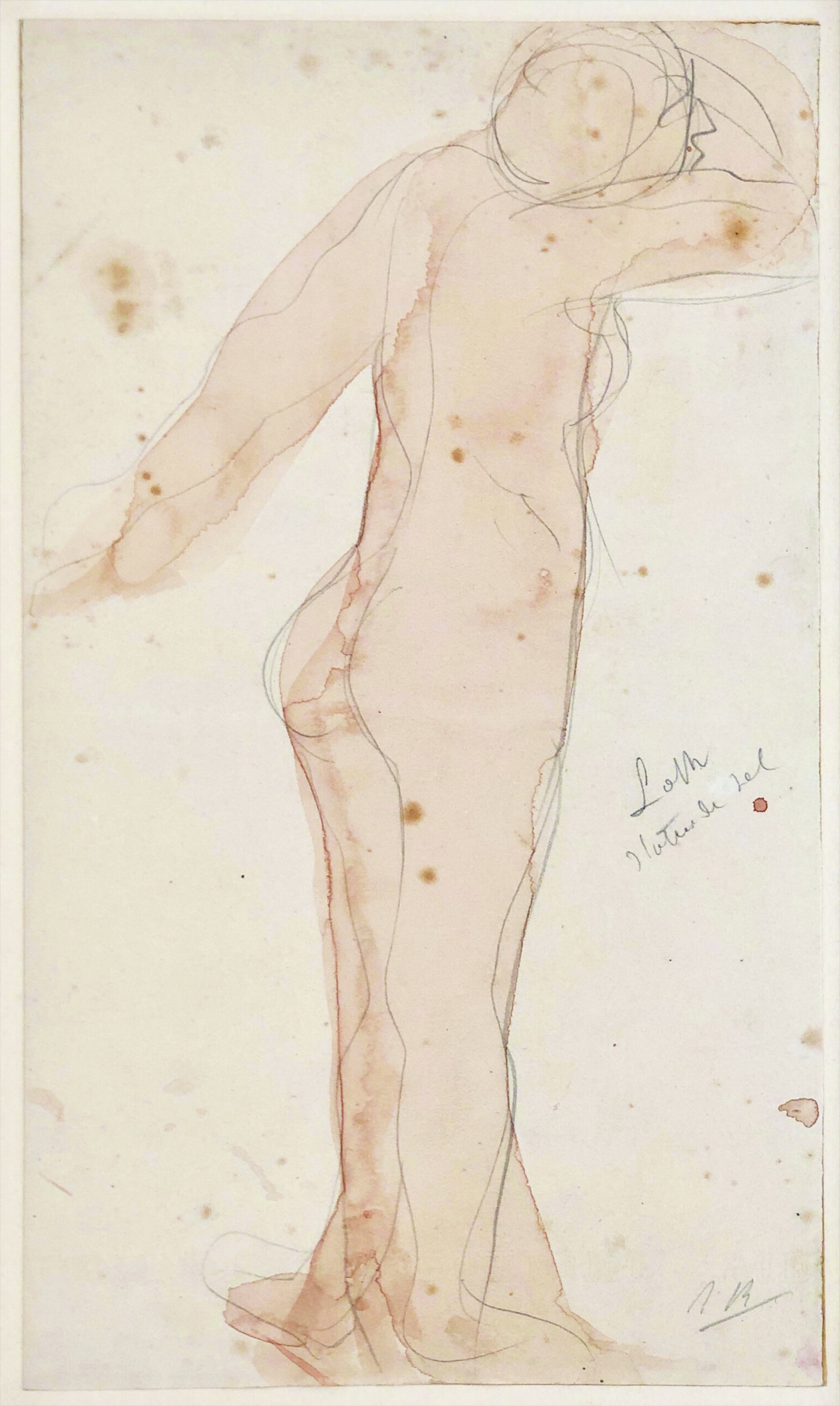
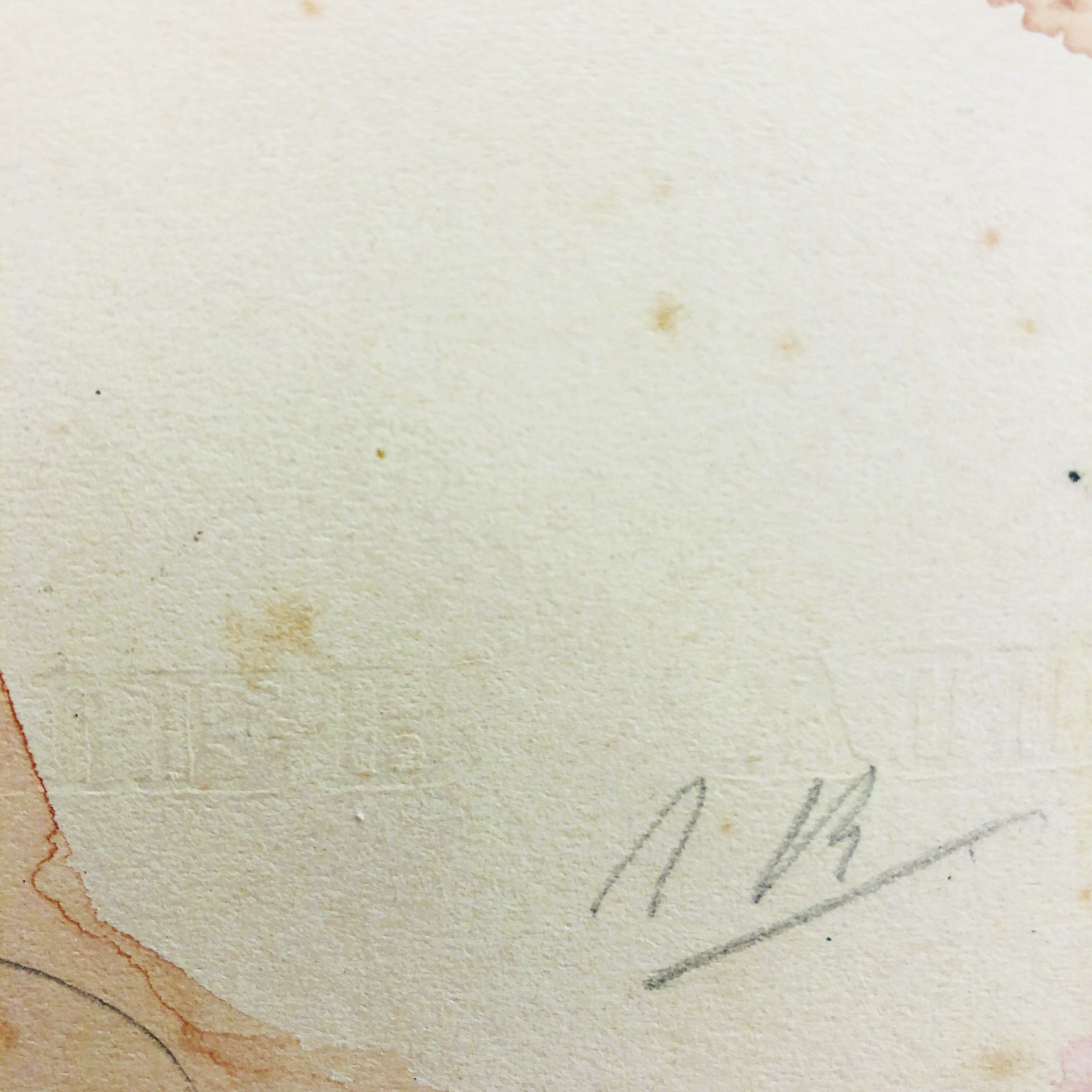
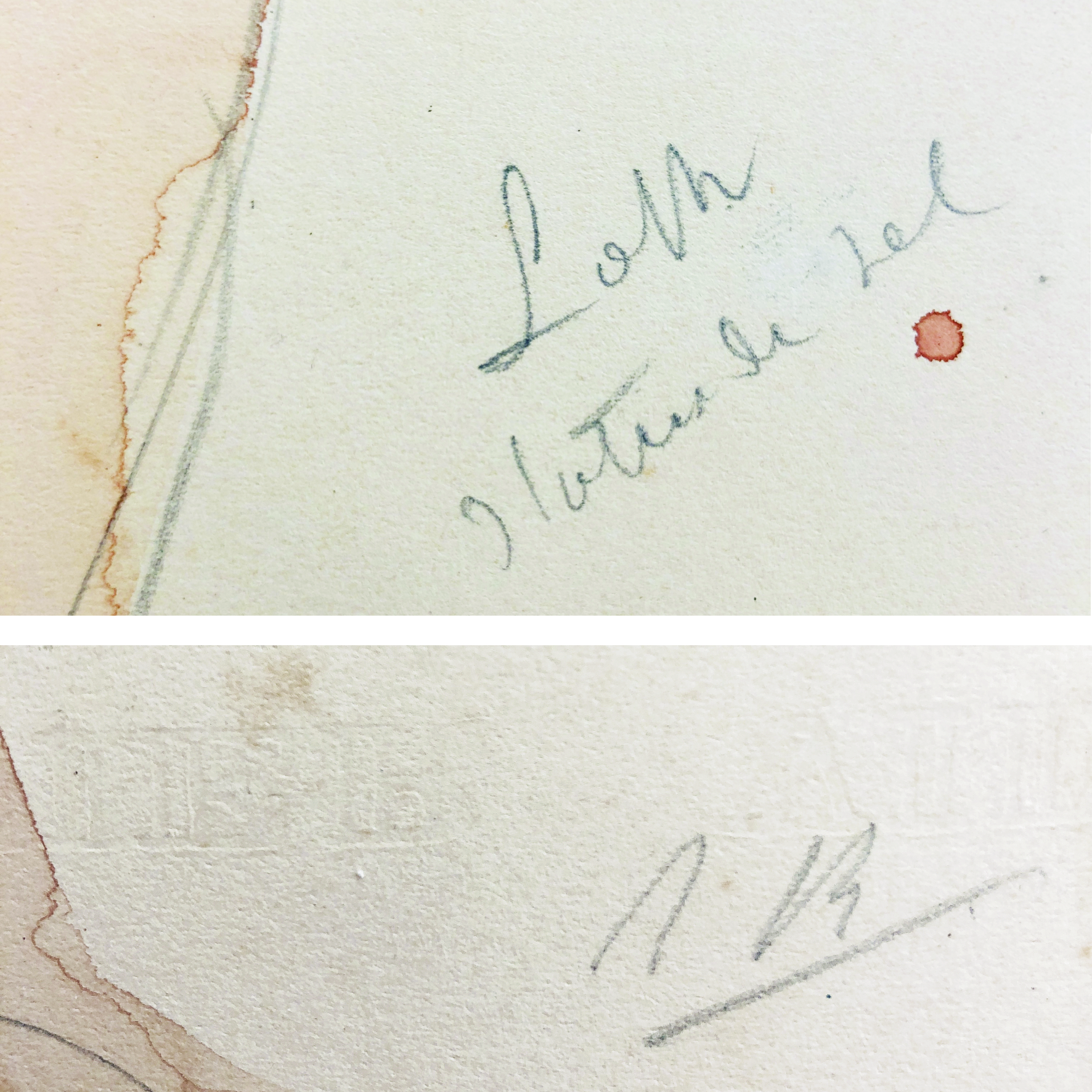
Aquarell in Rosa über Vorzeichnung in Bleistift, 32 x 18,5 cm Zeichnungsbogen, wohl Montage des Künstlers auf dünnes Velin, Unterlagekarton, 50,7 x 36,8 cm. Unten rechts vom Künstler in Bleistift monogrammiert «AR», in der Mitte rechts eigenhändig bezeichnet «Loth/statue de sel». Wasserzeichen «(Can)son & Mont- golfier». Ursprünglich Sammlung Fritz Meyer-Fierz, Zürich, wahrscheinlich erworben durch Galerie Moos, Genf. Es liegt eine Expertise von Christine Buley-Uribe vor. Sauber in der Erhaltung, minimale Altersspuren.
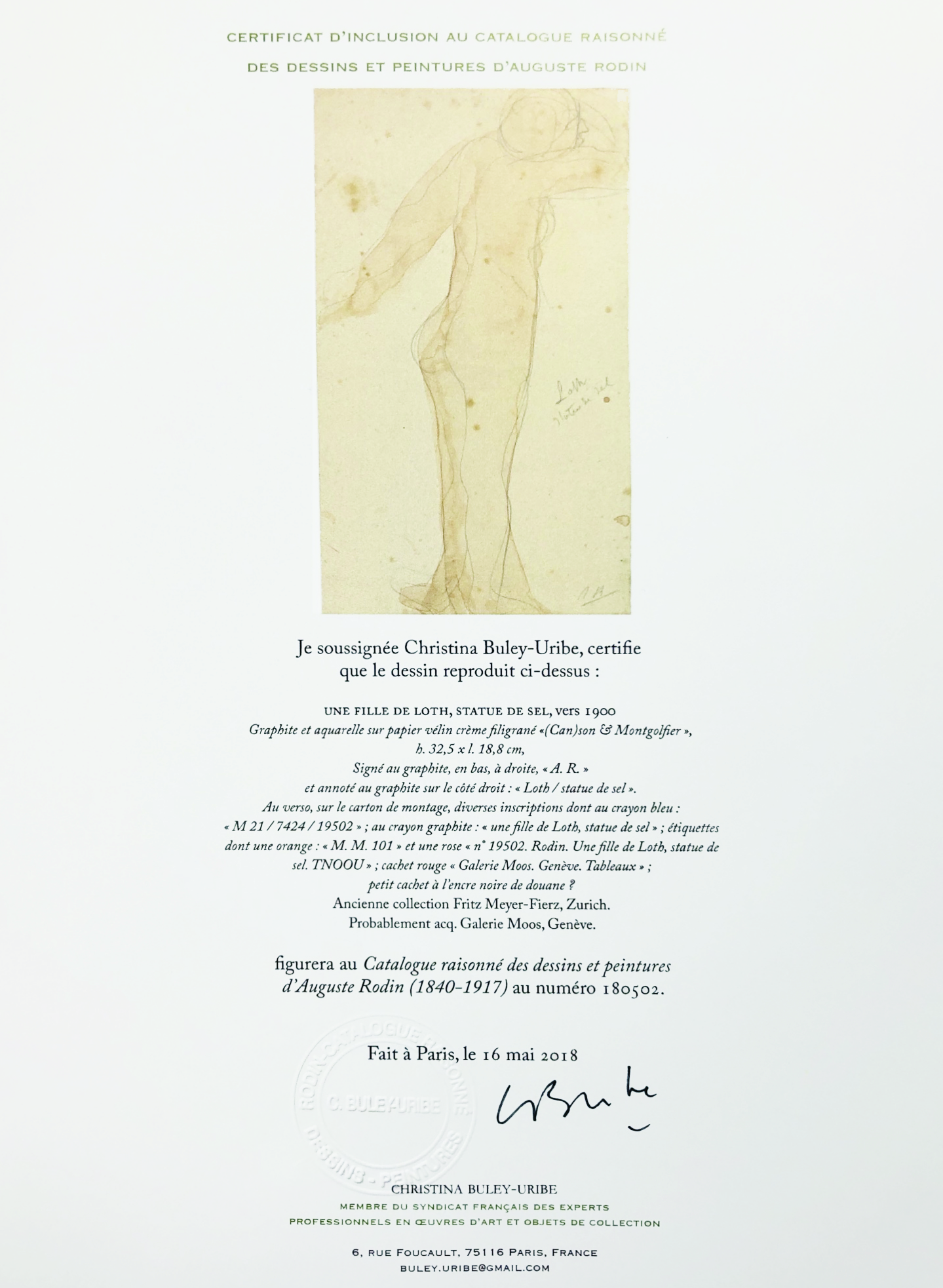
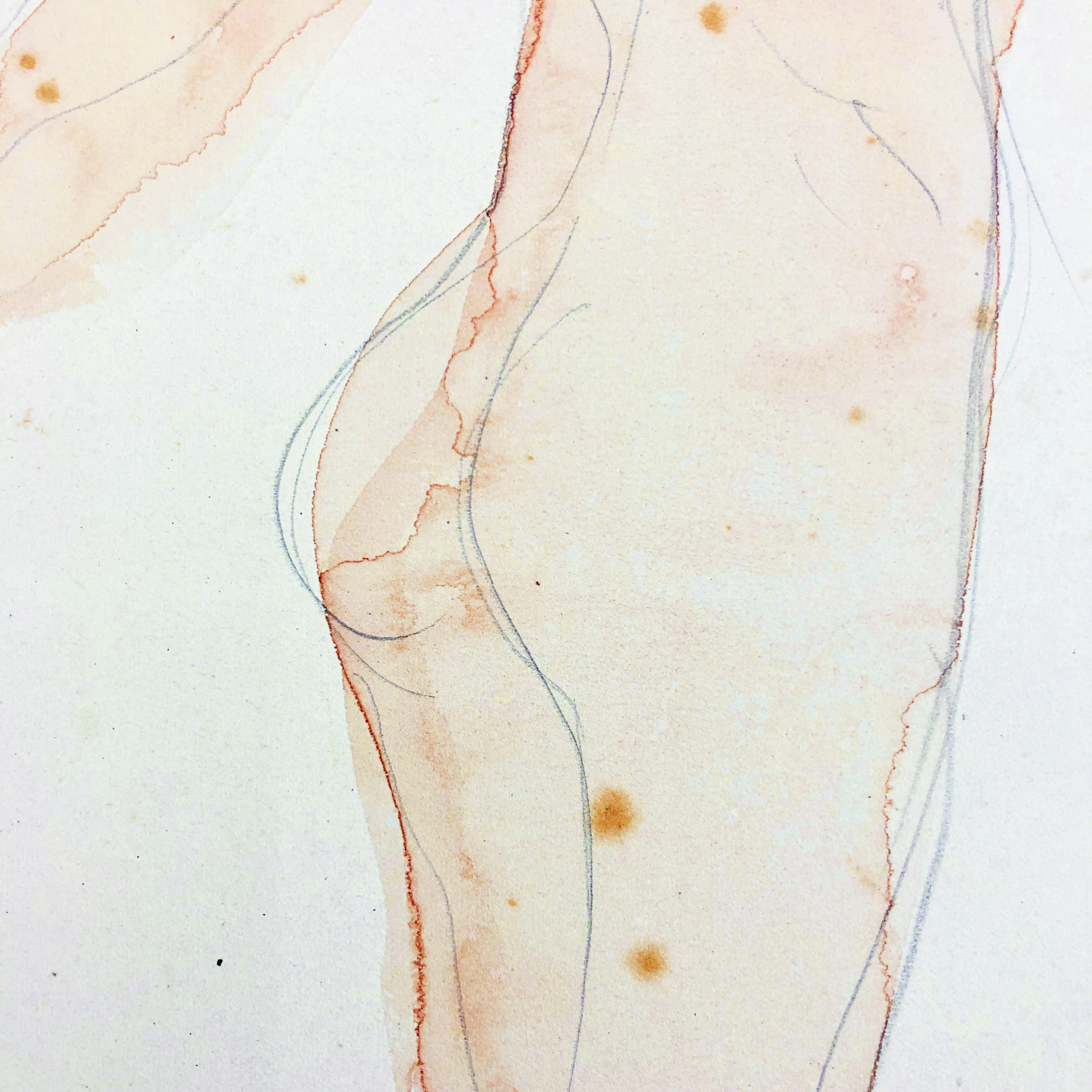
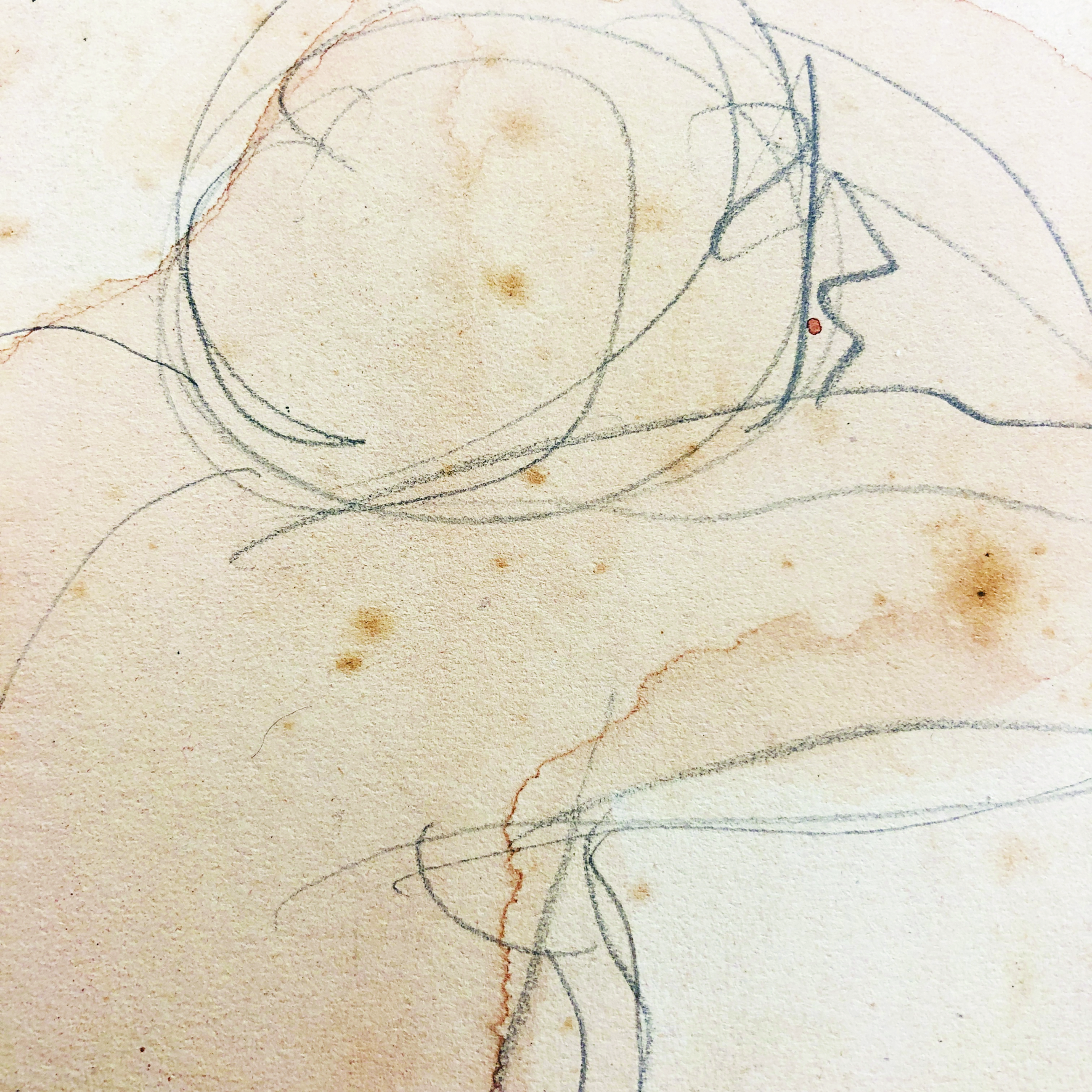
Loths Tochter ist skizziert just in dem Moment, als sie – noch ganz lebendiges Mädchen – gerade von der Erstarrung zur Salzsäule erfasst wird. In dieser leicht dahingeworfenen Zeichnung tritt die ganze Meisterschaft Rodins zutage: Die Ambivalenz zwischen Bewegung und Erstarrung wird durch die hastigen Striche des Bleistifts im Kontrast zur gemächlichen Colorierung perfekt inszeniert. Das Blatt ist insofern exzeptionell, da nur noch eine einzige weitere Bearbeitung des Themas im Werk von Rodin existiert, ein Aquarell in der Sammlung des Musée Rodin in Paris (Inv.-Nr. D.04927). Christina Buley- Uribe nimmt an, daß das vorliegende Blatt die erste Variante ist. Ihre vorliegende Expertise bestätigt, dass dieses Blatt in Rodins Werksverzeichnis «Catalogue raisonné des dessins et peintures d’Auguste Rodin (1840-1917)» unter der Nummer 180502 aufgenommen wird.
A Daughter of Loth, Salt Statue
around 1900
Watercolour in pink on preliminary pencil drawing, sheet: 12 3/5 x 7 1/9” (32 x 18.5 cm); mounted by the artist on thin velin, underlaid cardboard: 20 x 14 1/2” (50.7 x 36.8 cm), Signed below right with pencil «AR» and middle right «Loth/ statue de sel». Watermark «(Can)son & Montgolfier». Originally Collection Fritz Meyer-Fierz, Zurich, probably acq. Galerie Moos, Geneve. An expertise by Christine Buley-Uribe is existing. Clean condition, marginal signs of aging.
Loth’s daughter is recorded just at the moment when she – still a living girl – is just turning to a statue of salt. In this easily sketched drawing, Rodin’s entire mastery comes to light: the ambivalence between movement and solidification is perfectly reflected by the hasty strokes of the pencil in contrast to the leisurely coloring. The sheet is exceptional in that there is only one further treatment of the subject in the work of Rodin, a watercolor in the collection of the Musée Rodin in Paris (inv. No. D.04927). Christina Buley-Uribe assumes that this sheet is the first variant. Her expertise is confirming that this sheet will be included in the «Catalogue raisonné des dessins et peintures d’Auguste Rodin (1840-1917)», under the number 180502.