
Exhibition Opening Friday, January 23, 2026, 7 p.m.
Exhibition runs until February 21, 2026
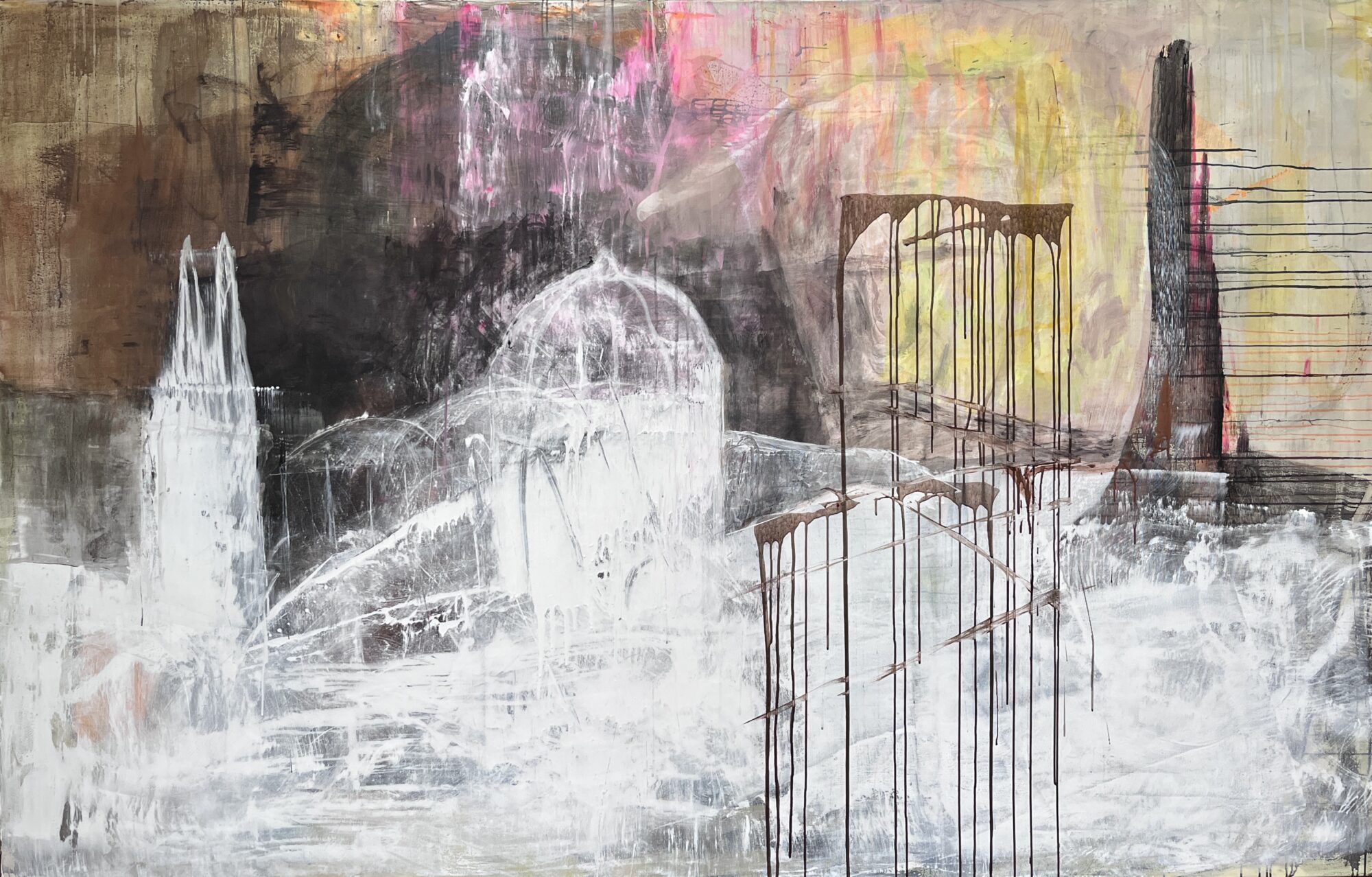
The Oberhausen-based painter and sculptor presents mostly large-format paintings from the last two years, which explore the themes of landscape, architecture, and the environment through painterly experimentation.
Showing all 8 results
-

Robin Horsch: Untitled
3.900,00 € Details -
Robin Horsch: Untitled
8.600,00 € Details -
Robin Horsch: Untitled
8.600,00 € Details -
Robin Horsch: Untitled
7.800,00 € Details -
Robin Horsch: Untitled
7.800,00 € Details -
Robin Horsch: Untitled
3.900,00 € Details -
Robin Horsch: Untitled
3.900,00 € Details -
Robin Horsch: Untitled
5.900,00 € Details


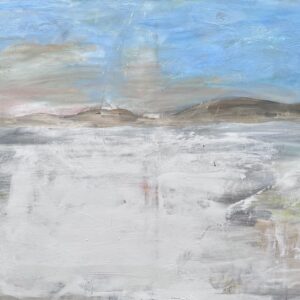
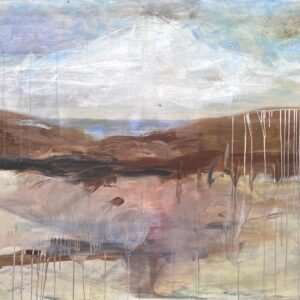
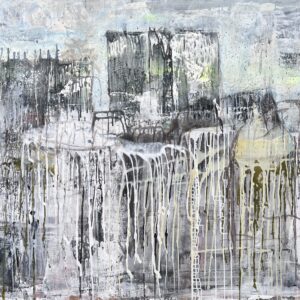
“A long day, caressing air.” This title—a line from the early Renaissance poet Francesco Petrarch—refers to one of the most famous texts in European intellectual history: “The Ascent of Mont Ventoux.” In it, Petrarch describes how he climbed a mountain in 1336, not out of necessity, not out of religious duty, but out of curiosity, out of the pure desire to see with his own eyes. He describes landscape not as a backdrop or symbol, but as a sensually perceptible space. Many art historians consider this the first intentional, reflective perception of landscape in the modern era.
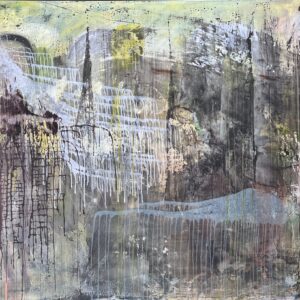
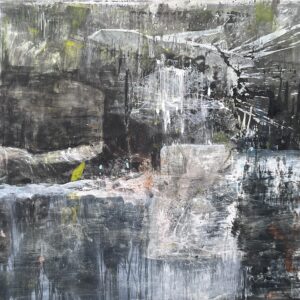
Why is this relevant to the painting of Robin Horsch? Horsch, too, is concerned with perception and seeing. With exposing oneself to an environment—nature as well as architecture—that is not simply depicted, but experienced, lived through, and processed. Horsch collects impressions: walks and hikes, views of streets and facades, construction sites, vegetation, and transitional zones. Yet these impressions do not return in his paintings as motifs in the classical sense. They are not illustrated. They are transformed. What we see here are large-format canvases, painted all over, dominated by powerful, gestural streaks of color. The paint lies thickly applied to the canvas, physical, almost sculptural. It is a trace of movement, a trace of a process, a trace of a decision. And yet—or perhaps precisely because of this—here and there a piece of reality seems to emerge: a fragment of architecture, a hint of landscape, a horizontal line, a vertical break. These are not windows to the world, but remnants of memory, sediments of seeing, so to speak.
This painting clearly stands in a tradition. It can be interpreted within the sphere of tension between Jean Dubuffet, Emil Schumacher, and Anselm Kiefer. From Dubuffet perhaps comes the distrust of the smooth surface, the delight in materiality, in the raw and untamed. From Emil Schumacher comes the gesture, the eruptive moment, the idea of painting as an event. And Kiefer’s distinctive connection between landscape, history, and existential weight—even though Robin Horsch works in his own unique way, perhaps lighter, more open, and more fragmentary.
However recognizable these art historical precedents may be, they don’t explain everything. For Robin Horsch’s painting is profoundly contemporary. It doesn’t arise from a quotation, but from an attitude. From a constant engagement with the world.
And here we return to Petrarch. Petrarch stands on the summit of Mont Ventoux and gazes upon the landscape. But this gaze is by no means innocent. It is fractured, reflective, accompanied by doubt. Petrarch wonders whether marveling at the world is not simultaneously a distraction from the inner self, from the spiritual, from what is truly important. Whether seeing doesn’t also mean losing oneself. This tension between outer and inner, between perception and reflection, runs through his entire text.
In Robin Horsch’s paintings, this tension is explored in a painterly way. His paintings are not landscapes in the classical sense—and yet they have much to do with landscape. They don’t show what something looks like, but rather how it feels to be in an environment. The streaks and gestures of color are not decoration.
Nothing is accidental, even if it may seem so. The canvas is a field on which decisions are made: When do I stop? When does a painting tip over? When does a gesture become mere repetition? These questions are existential for painting. And they are palpable in every single work in the exhibition. Perhaps this is precisely where the connection to Petrarch lies: Both—the poet and the painter—find themselves in a moment of transition. Petrarch between the Middle Ages and the Renaissance, between divine order and individual perception. Robin Horsch between abstraction and figuration, between memory and the present, between landscape and painting.